
Malaysia stands as one of Southeast Asia’s fastest-growing esports markets, where competitive gaming has evolved from casual hobby to professional career path. Esports Malaysia represents a vibrant ecosystem supported by government initiatives, commercial sponsors, and a passionate community of players spanning mobile and PC platforms. The country hosts numerous international tournaments annually, with prize pools exceeding RM 2 million, while infrastructure investments have established modern gaming hubs across Kuala Lumpur, Penang, and Johor Bahru.
The Malaysian esports scene encompasses multiple competitive titles—from Dota 2 and Mobile Legends to PUBG Mobile and Valorant—with dedicated national leagues and internationally recognized teams. Government backing through Youth and Sports Ministry programs, combined with telecommunications giants like Maxis and Celcom sponsoring leagues, has created sustainable career opportunities for professional players.
Important notice: This content is for informational purposes only. Esports participation and related betting activities are restricted to individuals 18 years and older. Always engage responsibly and within legal boundaries.
Overview of Esports in Malaysia
The esports malaysia landscape encompasses a diverse mix of competitive titles, professional organizations, and grassroots communities that collectively generate annual revenues exceeding RM 300 million. Malaysia ranks among the top five esports markets in Southeast Asia by audience size, with approximately 8 million active viewers consuming competitive gaming content through streaming platforms and live events.
Competitive gaming infrastructure has expanded significantly since 2018, with Kuala Lumpur establishing dedicated esports venues such as Esports Arena Berjaya Times Square and Level Up Esports Centre in Sunway Pyramid. These facilities provide tournament-grade equipment, including high-refresh-rate monitors, gaming PCs with RTX 4000-series GPUs, and fiber internet connections delivering sub-5ms latency.
The Malaysian esports demographic skews young, with 65% of competitive players aged between 16 and 28 years. Mobile esports attracts broader participation due to lower barriers to entry—smartphones costing RM 1,000 can run competitive titles at acceptable frame rates, compared to gaming PCs requiring RM 4,000 investments. Prize money distribution has improved, with top-tier Malaysian players earning between RM 10,000 and RM 50,000 monthly through tournament winnings, sponsorships, and streaming revenue.
History and Growth of Malaysian Esports
Malaysia’s competitive gaming roots trace back to early 2000s LAN cafés where Counter-Strike 1.6 and Warcraft III tournaments attracted hundreds of participants. The first organized national championship occurred in 2003 when the World Cyber Games held Malaysian qualifiers. Growth remained modest until 2010, when improved internet infrastructure enabled smoother online play and international competition participation.
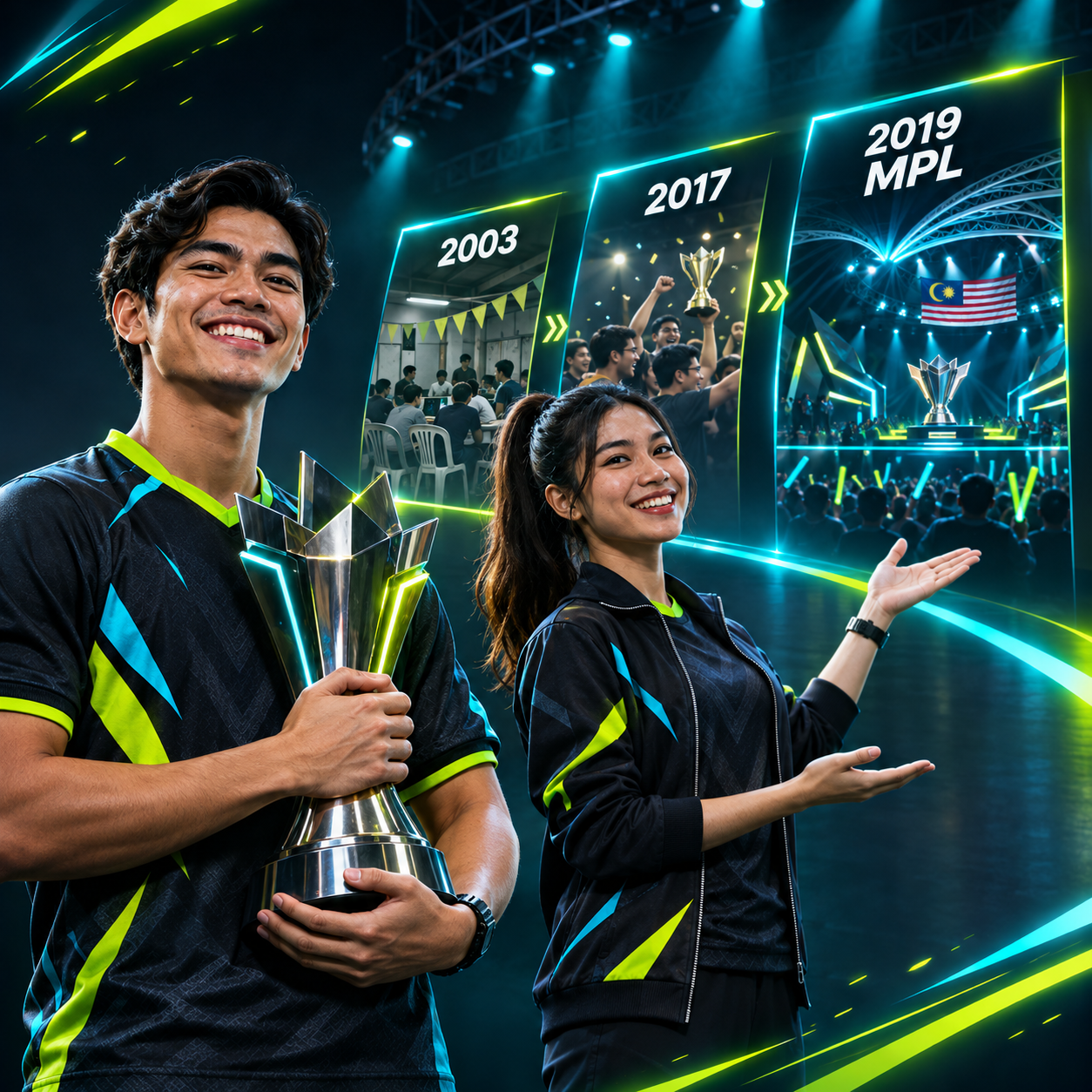
The watershed moment arrived in 2015 when Malaysian Dota 2 team Orange Esports secured third place at The International 3, earning $287,441 in prize money. This achievement demonstrated Malaysian players could compete globally, triggering increased media coverage and commercial interest.
The Ministry of Youth and Sports formally recognized esports as a sport in 2017, enabling government funding and national team formation.
Mobile gaming’s explosion reshaped the landscape after 2018, when Mobile Legends: Bang Bang became Malaysia’s most-played competitive title with over 3 million active ranked players.
The Mobile Legends Professional League (MPL) Malaysia launched in 2019, offering seasonal prize pools exceeding RM 800,000 and providing stable salaries for 80+ professional players.
Popular Esports Games in Malaysia
Mobile Legends: Bang Bang dominates Malaysian competitive gaming with 35% market share among active esports participants. The 5v5 MOBA’s low hardware requirements and short 15-minute match durations align with Malaysian gaming habits. MPL Malaysia Season 11 in 2023 recorded 12 million total views, while champions Todak earned RM 300,000 in prize money plus performance bonuses.
Dota 2 maintains prestige despite smaller player numbers, attracting hardcore competitive audiences. Malaysia esports teams have earned $4.2 million cumulative from Dota 2 tournaments since 2012, with Fnatic’s Malaysian roster consistently ranking among Southeast Asia’s top three. ESL One Malaysia 2023 in Genting Highlands featured $400,000 prize pool, demonstrating sustained commercial viability for PC-based titles.
PUBG Mobile captures the battle royale segment, with national teams representing Malaysia at PMGC (PUBG Mobile Global Championship). The 100-player format creates dramatic broadcast moments that translate well to streaming platforms. Malaysian squad Geek Fam finished top 8 globally in 2022, earning $150,000 and securing multi-year sponsorships from peripheral manufacturers.
Valorant’s tactical shooter gameplay has gained traction since 2021, particularly among former Counter-Strike players seeking fresh competitive environments. VCT (Valorant Champions Tour) Malaysia qualifiers attracted 48 teams in 2023, with prize pools reaching RM 100,000. Rising viewership suggests potential to rival MOBA popularity within three years.
Major Esports Tournaments and Events
Esports tournaments Malaysia span multiple competition tiers—international majors, national championships, and grassroots community events creating year-round competitive calendars. The Malaysia Esports League (MESL) serves as the country’s premier multi-title championship, featuring Mobile Legends, Dota 2, Valorant, and FIFA competitions with combined prize pools exceeding RM 1.2 million annually.
ESL One Malaysia represents the highest-tier international event hosted domestically, bringing global Dota 2 teams to Genting Highlands’ Arena of Stars. The 2023 edition featured 12 teams competing for $400,000, with tickets selling out within 48 hours. The event generated estimated RM 8 million economic impact through tourism, hotel bookings, and local spending.
MPL Malaysia operates franchise-based seasonal structure with eight permanent teams competing in double round-robin format followed by playoffs. Each season spans 10 weeks with matches Thursday through Sunday, creating consistent content schedules that build audience habits. The league’s stability has enabled players to secure mortgages and plan families, legitimizing esports as sustainable career choice.
The SEA Games include esports as medal events since 2019, with Malaysia fielding national teams across six titles. Gold medals in Mobile Legends and PUBG Mobile at 2021 SEA Games in Vietnam elevated esports’ mainstream recognition, earning primetime news coverage equivalent to traditional sports.
Leading Malaysian Esports Teams and Players
Team SMG (Social Media Gaming) dominates Malaysian Mobile Legends competition with four MPL Malaysia championships since 2020. The organization’s success stems from structured talent development—scouting players from amateur leagues, providing full-time salaries averaging RM 8,000 monthly, and employing dedicated coaching staff. The team’s international success includes runner-up finish at M4 World Championship, earning $150,000.
Todak represents the mobile esports success story, rising from tier-two competition in 2021 to MPL Malaysia Season 11 champions. The team’s breakthrough involved unconventional hero pool strategies and aggressive early-game tactics. Individual standout OHEB became Malaysia’s highest-earning mobile player with estimated career earnings exceeding RM 400,000 from tournament winnings and brand deals.
Orange Esports holds legacy status as Malaysia’s first internationally successful team, competing in Dota 2 and League of Legends. Though current competitive results trail their 2013 peak, the organization pivoted toward talent development and regional league operations through Orange Academy.
Individual player achievements elevate national profiles—MidOne (Yeik Nai Zheng) became Malaysia’s highest-earning Dota 2 player with over $1.3 million career prize money while competing for international organizations Team Secret and OG. His success demonstrated Malaysian players could compete at absolute top tier, inspiring new generations.
Mobile Esports and Competitive Gaming
Mobile gaming accounts for 72% of Malaysian competitive gaming participation, driven by smartphone penetration exceeding 90% among 15-35 age demographic. The accessibility factor eliminates traditional barriers—competitive mobile titles run on devices costing RM 1,000 versus RM 5,000 gaming PC requirements.
Mobile Legends Professional League Malaysia exemplifies mobile esports maturation, operating franchise system where team slots trade for RM 200,000-300,000. The financial commitment ensures organizational stability—teams invest in infrastructure, player salaries, and long-term development. Broadcast partnerships with Astro and streaming deals with YouTube Gaming generate revenue sharing, providing teams baseline income independent of performance.
PUBG Mobile maintains distinct competitive ecosystem with multiple tournament circuits—PMPL (Pro League), PMNC (National Championship), and PMGC (Global Championship) creating year-round competitive calendar. Malaysian teams train specifically for tournament formats where consistent top-10 placements matter more than individual victories.
Infrastructure development targets mobile-specific needs—Maxis collaboration with gaming cafés provides prioritized network routing for competitive titles, reducing latency from typical 45ms to sub-25ms during tournament conditions. Smartphone manufacturers Xiaomi and OPPO sponsor teams while providing latest flagship devices with 120Hz displays and vapor chamber cooling systems.
Streaming Platforms and Esports Media
YouTube Gaming dominates Malaysian esports streaming with 68% market share, driven by integration with existing YouTube consumption habits and superior mobile app performance. Professional players maintain dual content strategies—live streaming practice sessions and tournaments while uploading edited highlight videos.
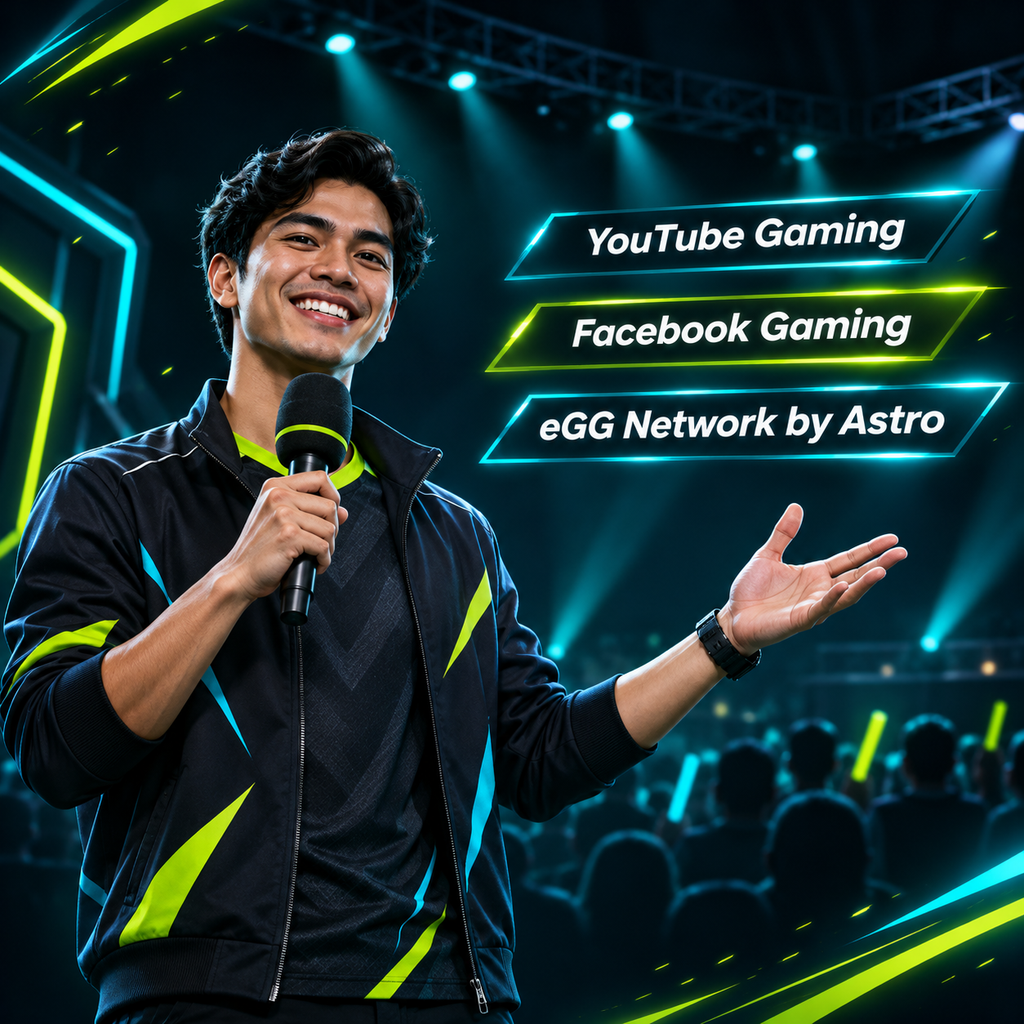
Top Malaysian streamers average 15,000 concurrent viewers during peak sessions, generating revenue through Super Chat donations, channel memberships, and advertising splits.
Facebook Gaming captures 22% market share through aggressive creator partnerships and localized payment systems supporting Malaysian ringgit directly. The platform’s strength lies in community building—integrated Facebook Groups enable fan interaction beyond stream chat. Exclusive streaming deals with MPL Malaysia provide platform differentiation.
Traditional media integration legitimizes competitive gaming through mainstream coverage. Astro’s eGG Network provides 24/7 esports content including live tournament broadcasts, player documentaries, and news programming. The dedicated channel reaches 2.3 million households, exposing esports to demographics beyond core gaming audiences.
Government and Industry Support for Esports
The Ministry of Youth and Sports officially recognized esports as legitimate sport in 2017, unlocking access to National Sports Council funding and facilities. Annual government allocation for esports development reached RM 8 million in 2023, supporting national team training, tournament hosting grants, and grassroots development programs. National team members receive monthly allowances of RM 2,500, sports science support including physiotherapy and psychological counseling, and access to training facilities at Bukit Jalil Sports Complex.
The Malaysian Esports Federation serves as governing body coordinating competitive standards, anti-doping policies, and international representation. MESF membership includes 85 registered organizations—teams, tournament organizers, and gaming cafés—creating unified voice for industry advocacy. The federation establishes standardized tournament rules, certifies referees and administrators, and maintains player registries enabling contract enforcement.
Commercial partnerships drive sustainable funding beyond government support. Telecommunications giant Maxis invested RM 12 million across three years sponsoring multiple leagues and teams while promoting gaming-optimized mobile plans. Banking sector engagement emerged through youth-focused digital banks recognizing gamers as attractive customer demographic. BigPay and GXBank sponsor tournaments while offering esports-themed debit cards with cashback on gaming purchases.
The Future of Esports in Malaysia
Revenue projections estimate Malaysian esports market reaching RM 500 million annually by 2026, driven by expanding sponsorship categories beyond endemic gaming brands. Automotive manufacturers, financial services, and fast-moving consumer goods increasingly view esports as premium route to youth demographics. Non-endemic sponsorships already constitute 40% of industry revenue in 2024, up from 18% in 2020.
Regional tournament hub ambitions position Malaysia to host international championships leveraging geographic centrality, modern infrastructure, and government support. Kuala Lumpur’s connectivity—direct flights to every major Southeast Asian city and competitive hotel rates—creates compelling hosting proposition. Government tourism arm intentions to bid for major international events including potential League of Legends World Championship qualifier and PUBG Mobile Global Championship.
Talent development initiatives aim to quadruple semi-professional player base to 2,000 individuals earning supplementary income from competitive gaming. Academy systems operated by professional teams scout talent from grassroots tournaments, providing coaching and competitive opportunities. The pathway involves tier-two leagues feeding into professional rosters, mirroring football development academies.
Challenges include player burnout, career longevity concerns, and maintaining competitive integrity. Professional gaming careers average 3-5 years before reflexes decline and new talent emerges. Industry initiatives including player unions negotiating pension contributions and transition programs helping retired players move into coaching, commentary, or content creation address sustainability.
FAQ
What are the most popular competitive titles in esports Malaysia?
Mobile Legends: Bang Bang dominates with 35% market share among competitive players, followed by Dota 2, PUBG Mobile, and Valorant. Mobile Legends Professional League Malaysia offers the highest participation rates with over 3 million ranked players, while Dota 2 maintains prestige through international success and $4.2 million cumulative Malaysian player earnings since 2012.
How much do professional esports players earn in Malaysia?
Top-tier Malaysian esports players earn RM 10,000 to RM 50,000 monthly combining tournament winnings, team salaries, sponsorships, and streaming revenue. Mid-tier professionals on MPL Malaysia teams receive RM 6,000-8,000 monthly base salaries plus performance bonuses reaching RM 50,000 for championship wins.
Does Malaysia have a national esports team?
Yes, Malaysia fields official national teams across multiple titles for international competitions including SEA Games and Asian Games. The Ministry of Youth and Sports coordinates national team selection through regional qualifiers, with chosen players receiving monthly allowances of RM 2,500, training facilities access at Bukit Jalil Sports Complex, and sports science support.
What government support exists for esports in Malaysia?
The Ministry of Youth and Sports provides RM 8 million annual funding for esports development, covering national team programs, tournament hosting grants, and grassroots initiatives. Official sport recognition since 2017 enables access to National Sports Council facilities and athlete welfare programs matching traditional sports.
Where can I watch esports tournaments Malaysia?
Major tournaments broadcast on YouTube Gaming, Facebook Gaming, and Astro’s eGG Network channel reaching 2.3 million households. MPL Malaysia streams live on official MPL YouTube channel and Facebook page, averaging 50,000-150,000 concurrent viewers during playoffs. Streaming schedules concentrate Thursday through Sunday evenings 7-11 PM.
How can I start competing in Malaysian esports?
Begin with ranked play in chosen title reaching top 5% percentile—approximately Mythic rank in Mobile Legends or Immortal in Dota 2. Join community Discord servers like Malaysian Esports Community organizing weekly amateur tournaments with RM 500-1,000 prizes. Attend cyber café local tournaments to network with semi-professional players and scout opportunities. Remember: individuals under 18 require parental consent for competitive participation.
Responsible Gaming Notice: Esports participation and related activities are for individuals 18 years and older. Competitive gaming should be balanced with education, physical health, and social responsibilities. The Malaysian Esports Federation promotes healthy gaming practices and provides resources for players, families, and communities to engage responsibly with competitive gaming.